Supplies:
- 4 or more pieces of fabric, each around 9″ by 12″
- low-loft batting
- sharp-pointed scissors for detail cutting fabric
- a sewing machine and foot that are for free-hand motion quilting
- sewing notions: thread, pins, seam ripper, sewing needle
- beads
- fossil samples or photos for inspiration
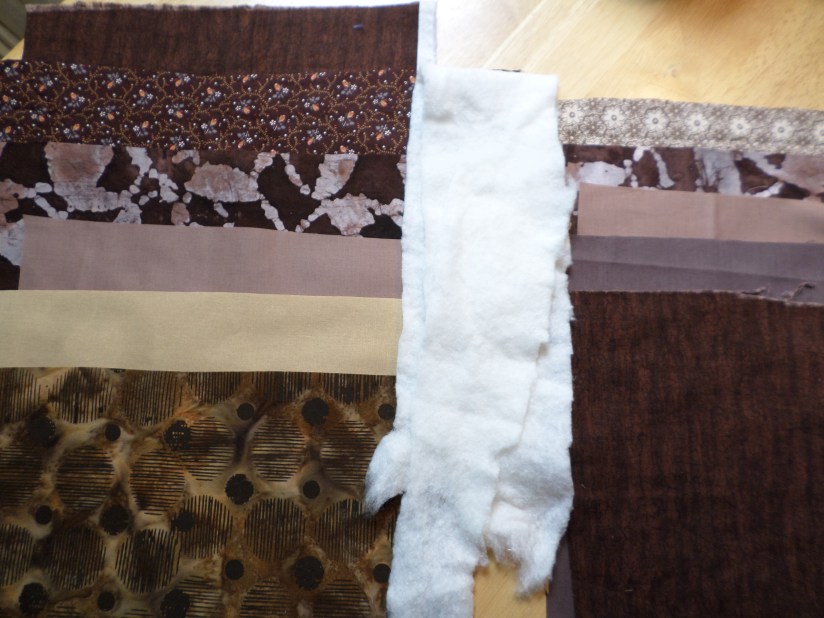
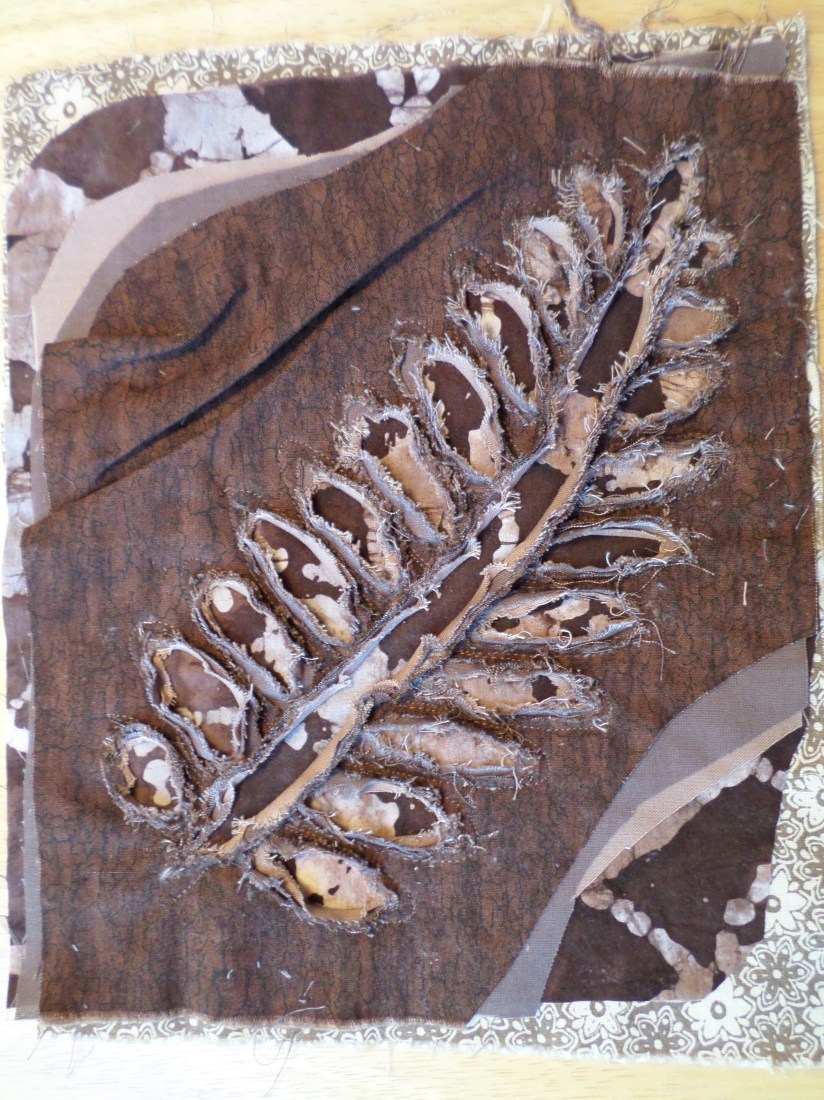
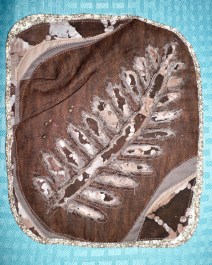
Following the premise set in the book “Layered Cloth: The Art of Fabric Manipulation,” by Ann Small, I selected several fabrics that had a fossilish look, as well as solid colors, and stacked them with a layer of batting between the bottom and next-to-bottom layers. I pinned the layers and used chalk to draw my fern design onto the top layer of fabric. It was important to sketch this out first, as I needed to figure how the fern impression would be created with sewn lines, and cut out areas. I had to plan how many layers I would cut through for each of the leaves and stem.
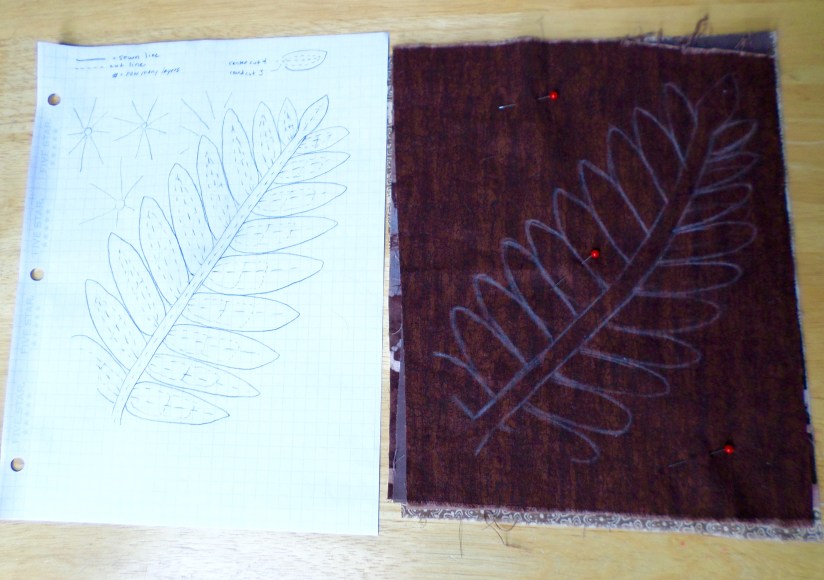

After free-motion sewing the fern outline, I wiped off the chalk residue. The next task was to start cutting away the layers. This can be a challenge because pointy scissors are apt to pierce through too many layers. So I used a pin to catch and lift up just the top layer of fabric, then I inserted the seam ripper to make a small hole. Now I could start carefully cutting with the pointy scissors. I cut the top fabric away for each leaf blade, about 1/8th inch away from the stitch line.
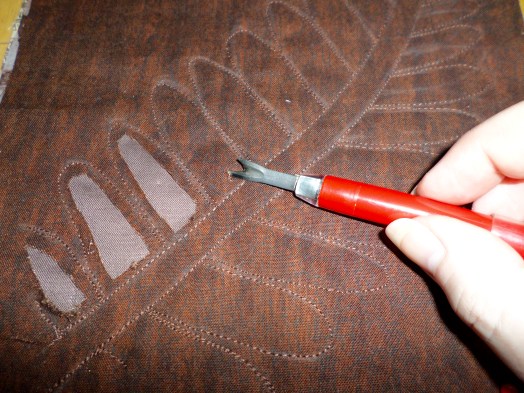
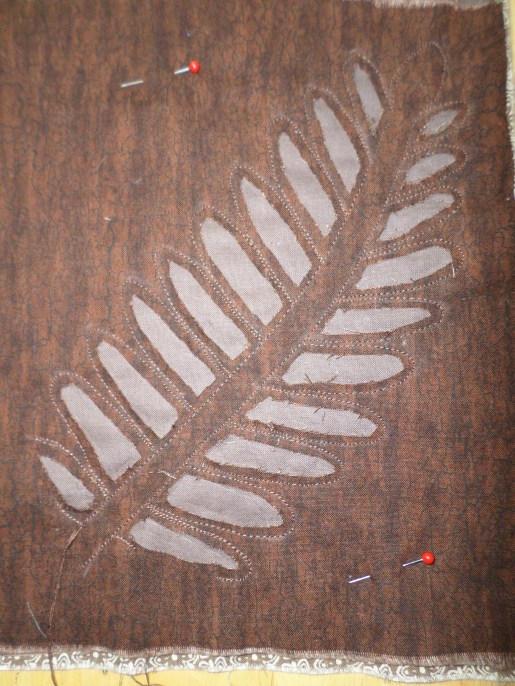
Next I cut away two solid colored layers of fabric, slightly smaller that the top layer cut out. This revealed a textured batik layer of fabric, which becomes the main fabric for the blades. I now used my thumbnail and scraped the raw cut edges around each blade; this helped open the blades and tuft the cut edges so they would stand up. After finishing the blades, I cut along the center of the stem, through three layers to reveal the batik fabric. I roughed up the raw edges, and trimmed random threads overall to even things out. I tried to iron the openings, but that didn’t seem to accomplish much. My fern was complete, so I played with the finishing touches.
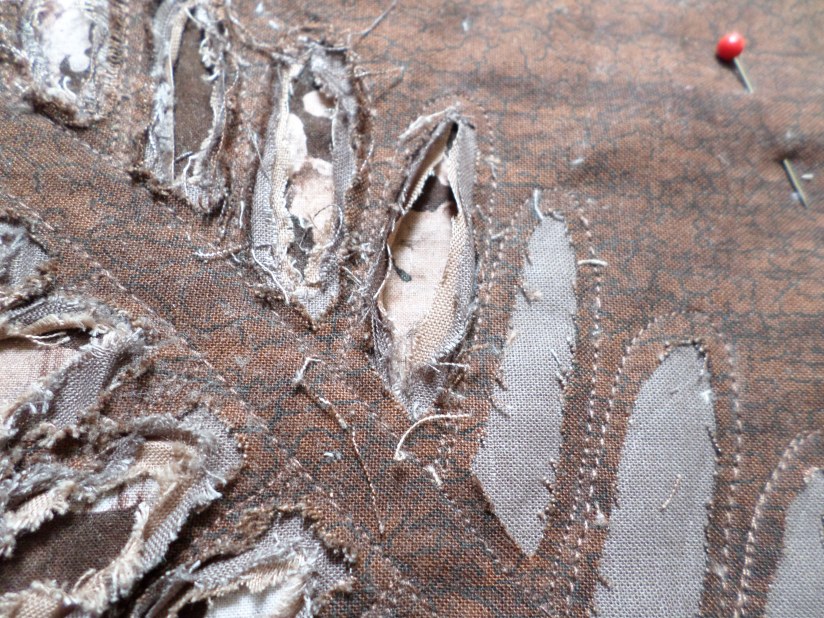
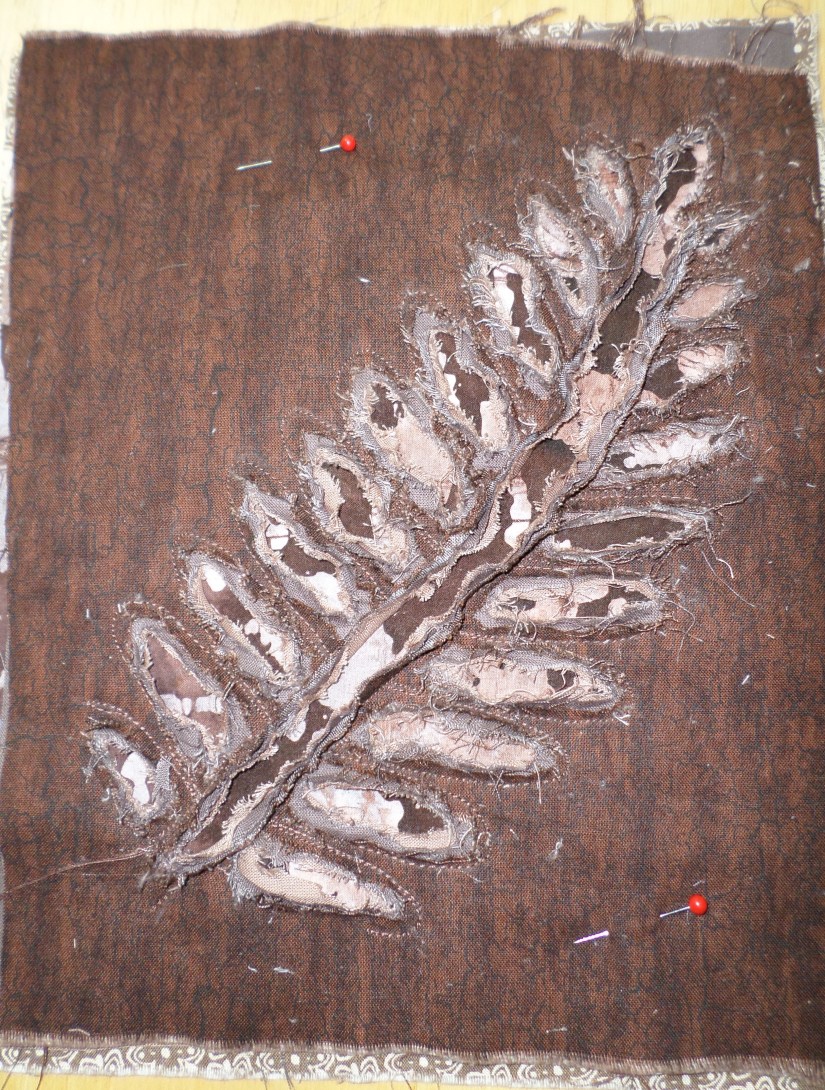
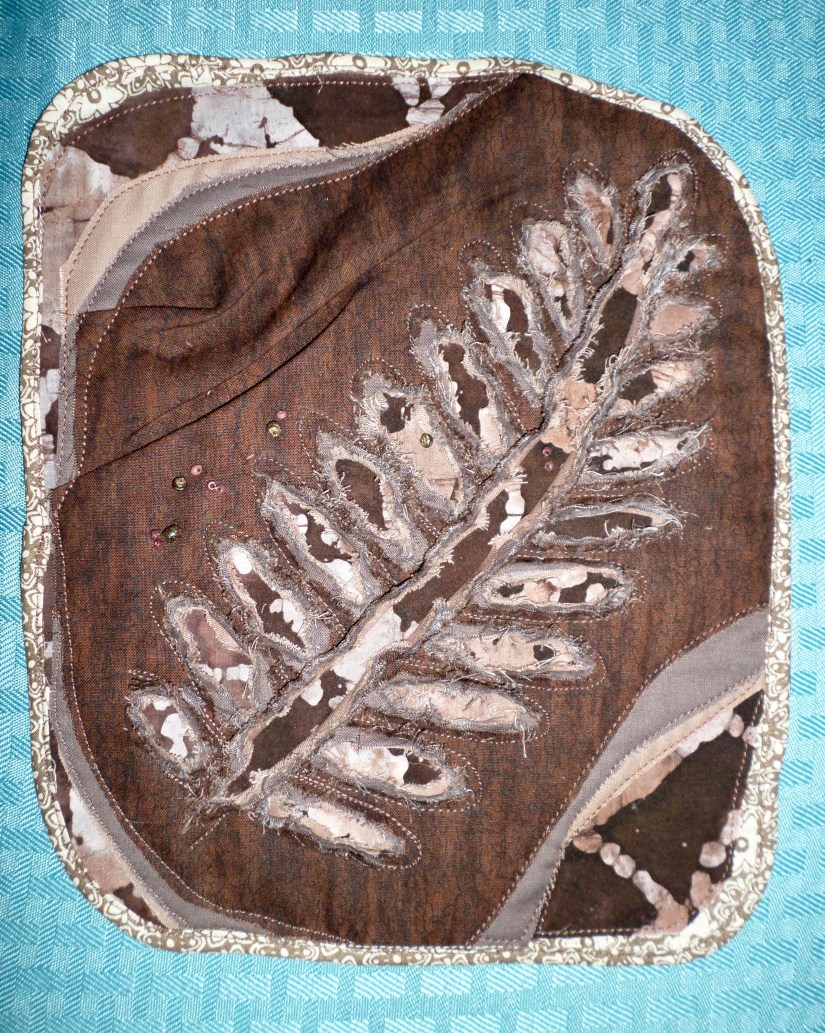
With thread, I tacked down a few spots of the top layer fabric to give it extra texture and creasing like a fossil rock may have. Then I trimmed back the layers of fabric, tiering them so each could be seen, and I stitched down their edges. I started adding beads, a few looked fine but I felt too many would be a distraction. That may change over time, but for now I like just a few. I used packaging tape to remove the last little bits of thread. My final touch was a thin binding.
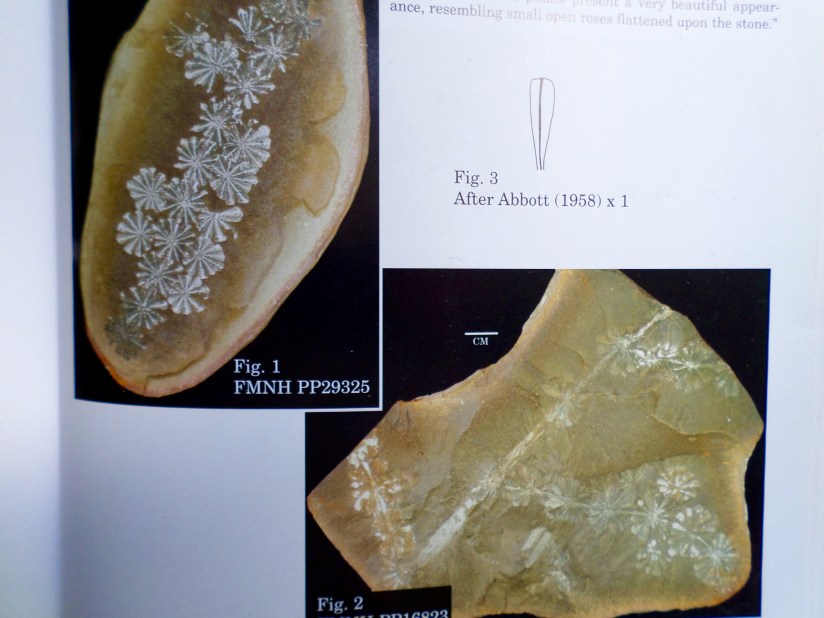
My next exploration was inspired from a photo* of an ancient plant that has leaves that are radial and flat, so the fossil looks like flowers. I used the same methods as above, but used my batik as the surface layer. It gives the piece a lot of movement and drama, but obscures the actual cut-away motifs. Some fossils are difficult to discern, so I feel this has a valid place in my triptych, but it is harder to see the work I’ve done.
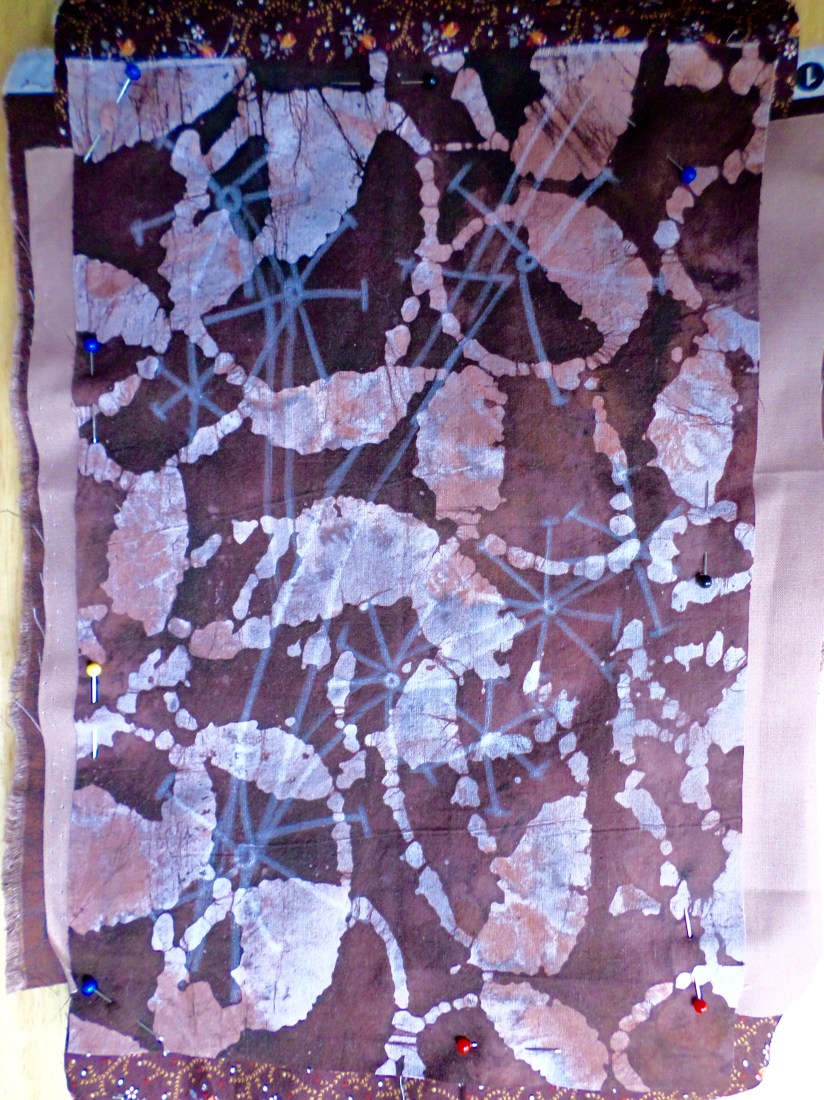


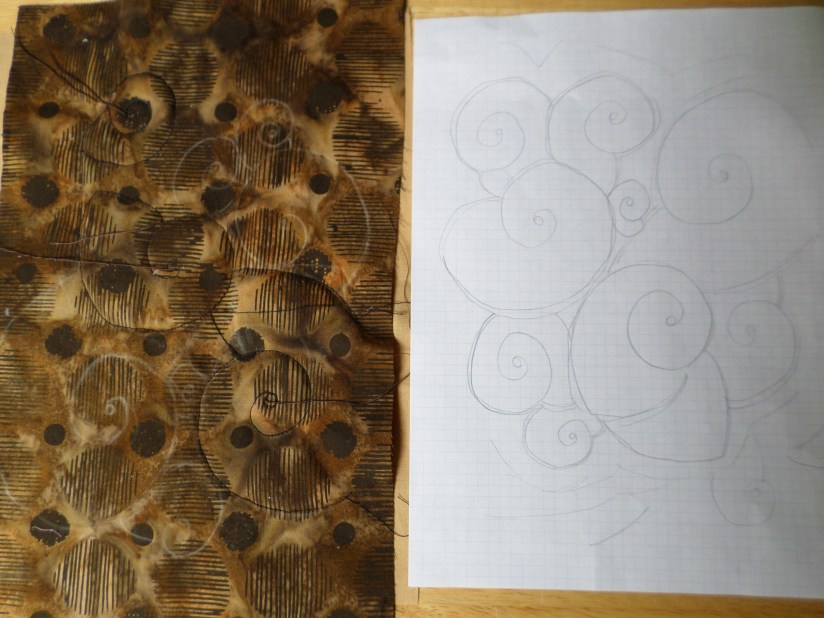
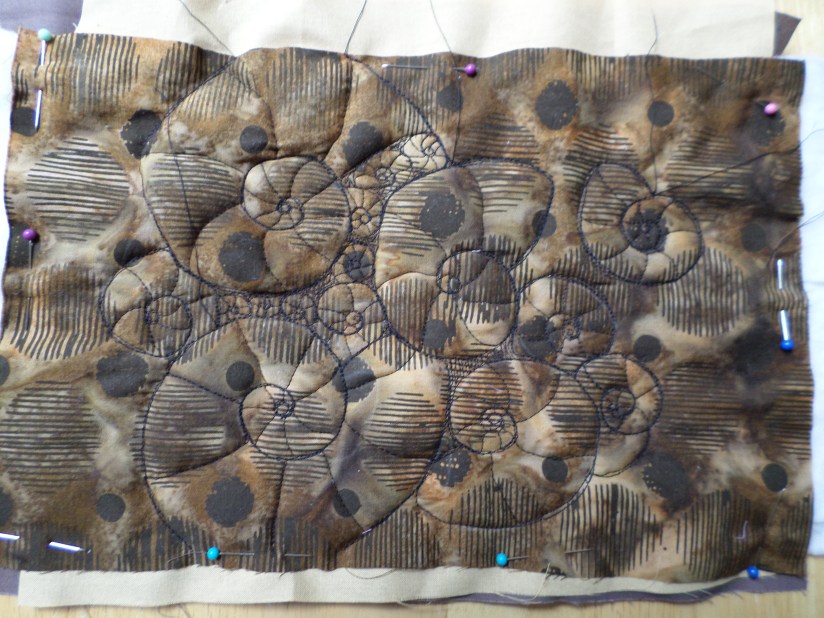
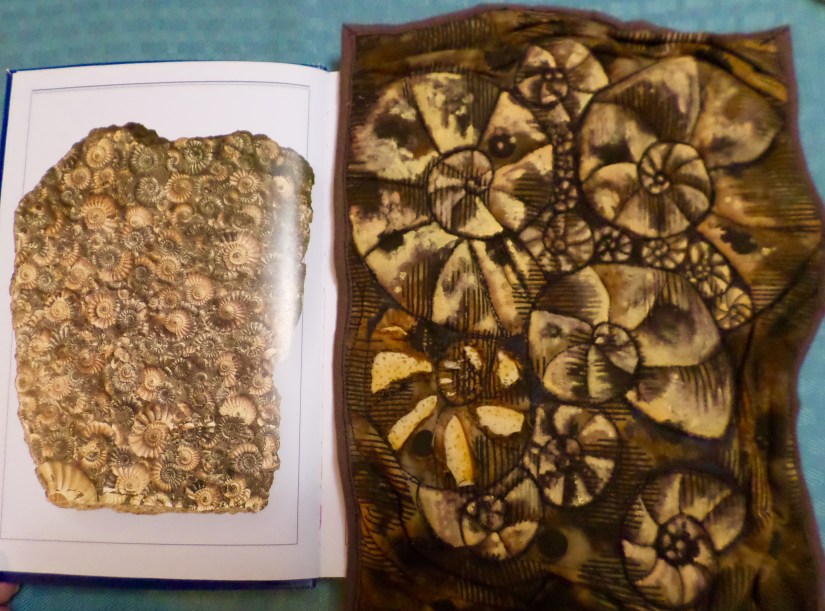
The final piece was of ammonite-styled shells, based on a photo from the Smithsonian Handbook of Fossils. I loved the depth and textures in the photo of the shells, and wanted to add extra layers of batting to my creation to enhance that depth field. In doing so, I did what’s known in many industries as “something stupid.” (no self-denigration here, just reporting the facts.) Firstly, I only used three layers of fabric. I placed a layer of batting between the bottom and middle layer. Then I added shell-shaped cutouts of batting beneath a few of the shells between the top layer and middle layer. After free-motion sewing the shells, the depth variances were lovely, but when I cut away the top layer on these thicker shells, the batting showed through. So, I lived and learned and changed my methods. I did cut one of the shells successfully. But the others I simply fabric painted the surface to bring out some dimensionality, and to match the shell that was cut. I like how this turned out, it just didn’t make good use of the layered cloth technique.


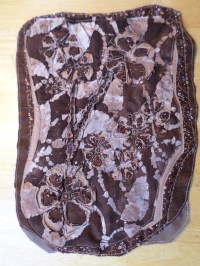
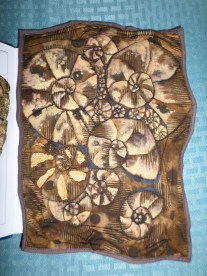
I plan on adhering these to a mat board and framing them. I’m not sure yet if it will be a single frame, or the three separate. But I am excited to have honored my Mazon Creek fossils!
*The photo of the floral style fossil is from page 91, “The Mazon Creek Fossil Flora” by Jack Wittry.

 thedawnofcreation
The beginnings of a quilt? Fran
LikeLike
That’s quite possible. I still have a few more fossil types in mind to try. And plenty of fabric : )
LikeLike